Build Notes / public-safe teardown library

The Hidden Build States

A compact public explainer for a recurring hardware gap: CAD, drawings, and BOMs can look ready while the next physical state is still unproven.

Two worlds, same failure class.

OSIRIS-REx and an electrical cabinet should not feel like random topics. They are two chapters of one idea: the next physical state was not fully proven before it mattered.

NASA context

A mission that did the impossibly hard part first.

  • MissionNASA asteroid sample-return mission to Bennu.
  • TimelineLaunched in 2016, collected material in 2020, returned the sample capsule in 2023.
  • FrameNASA did the extremely hard mission work successfully. This is not a NASA dunk.
  • LessonThe useful question starts after success: what real access/tool state can still slow the next step?
Ordinary equipment context

A cabinet can be complex and still miss a basic state.

  • ClassElectromechanical cabinet / control-panel package, not a toy enclosure.
  • InsideEnclosure, door/cover, VFD/inverter zone, DIN rails, wire ducts, cable glands, terminals, power/control devices, wiring, cooling, service, first article/FAT.
  • MissTeams can be thinking about real complexity and still miss the closed envelope with component depth, bend radius, gasket, finish, and tolerance.
  • LessonThe question is not "which document is missing?" It is "what may need to change in CAD/KD/BOM before the next physical loop gets expensive?"
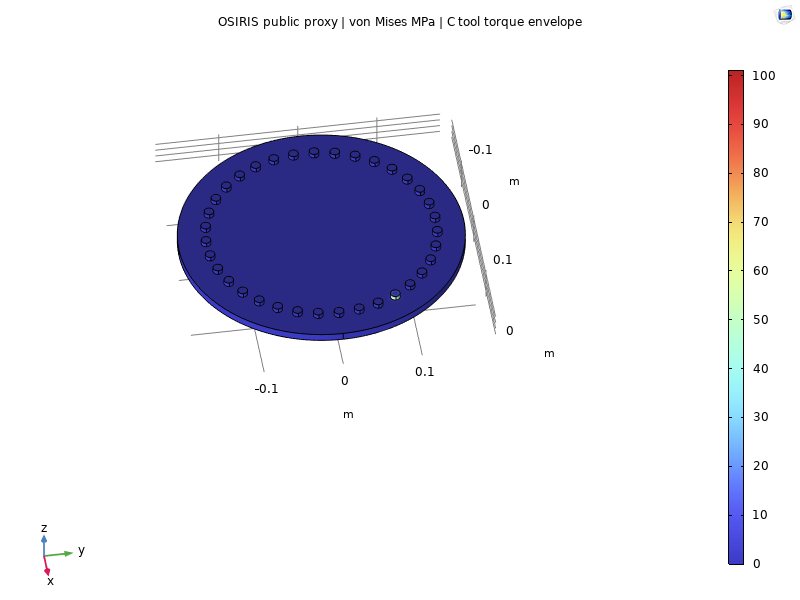
COMSOL stress plot for a public OSIRIS-REx TAGSAM proxy
Native COMSOL proxy: normalized 35-fastener pattern, local tool moment screen. Not NASA CAD, root cause, or certification.
01 / approved tool state

Can the approved tool actually do the job?

OSIRIS-REx brought Bennu material home. Later, access to the remaining sample slowed around two of 35 fasteners because work had to stay inside approved tool, glovebox, and curation constraints.

NASA later cleared the hurdle with approved custom tools. The transferable lesson is the hidden state: approved tool reach, tool arc, fallback removal, contamination control, and recovery path.

Core check: can the allowed tool reach, turn, and recover the part under the real environment constraints?
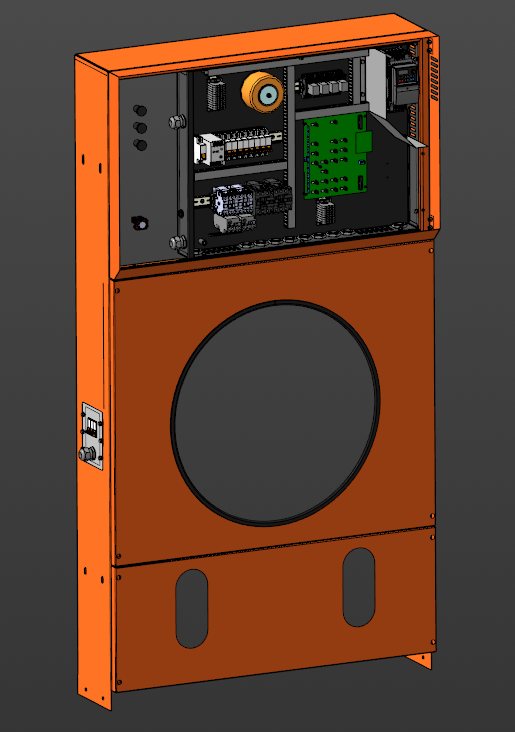
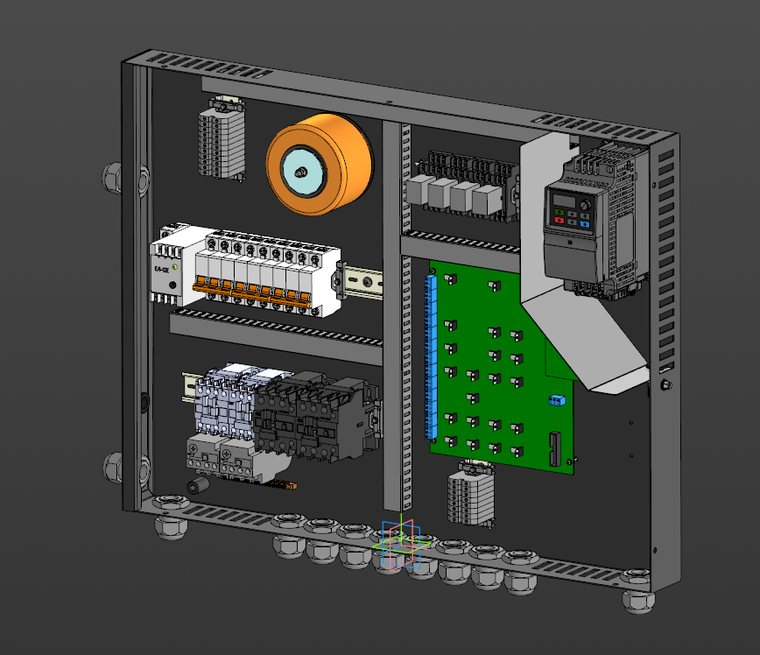
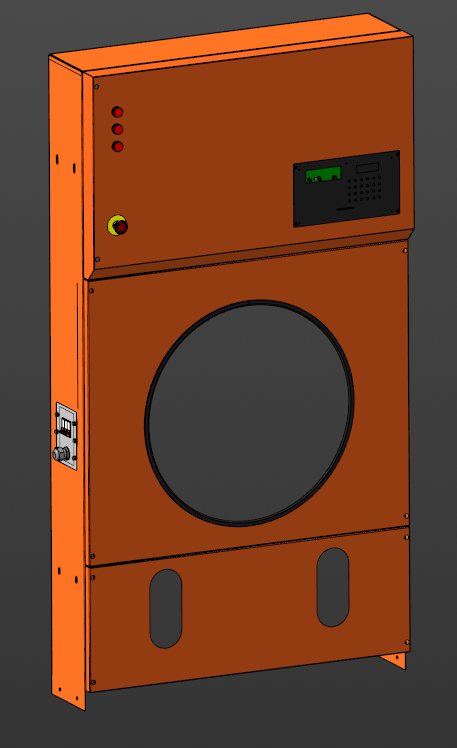
Public-safe cabinet CAD open-front view Public-safe cabinet CAD internal electromechanical view Public-safe cabinet CAD closed-front view
Open, internal, and closed CAD states. The lesson is the closed-envelope build state, not a missing-document complaint.
02 / closed envelope state

Does the assembly still work when the door closes?

A cabinet package can include real electromechanical complexity: rails, ducts, terminals, cable glands, contactors, inverter/VFD space, wiring, service, cooling, and FAT constraints.

The visible symptom can still be basic: the door or cover state was not proven with the real component depth, cable bend, gasket, finish, and tolerance stack.

Core check: does the closed state still work after the actual parts, wiring, finish, and service constraints exist?
Why this visual belongs

COMSOL is not decoration here.

The COMSOL image should appear only where it explains a physical screen: a normalized public proxy for tool moment, local load path, constraint reaction, and stress concentration around a stuck-zone class of problem.

The page should say what the screen can and cannot prove. The selected image supports the failure-mode-class lesson: an approved service/tool state may need a bounded load/deformation sanity check before a real intervention. It cannot claim NASA geometry, NASA loads, root cause, or certification.

What to prove before the next physical loop.

The output should not be "missing document" theater. It should name the physical state, the evidence gap, and the package change that can prevent late prototype rework.

Approved tool path

Show approach angle, driver/socket envelope, hand clearance, fallback method, and any material or cleanliness limits.

Closed envelope

Verify the real door, cover, gasket, bend radius, protruding components, finish, and tolerance stack together.

Service sequence

Define how the part is opened, removed, replaced, inspected, reassembled, and checked without improvisation.

Build scope

Separate what is built, supplied, tested, accepted, excluded, and assumed before the supplier or shop guesses.

First article / FAT

Tie the physical risk to a first-article or FAT check, not just to a comment in the CAD review.

Bounded load screen

Use a preliminary load/deformation sanity check only when scoped, with explicit assumptions and limits.

Public proof, bounded claims.

This Build Note uses official public NASA facts, a public-safe OSIRIS proxy screen, and public-safe cabinet CAD views. It does not use private customer evidence, NASA CAD, NASA loads, root-cause proof, certification, regulatory approval, formal engineering sign-off, or raw internal rule logic.

Build Notes becomes a chapter system.

Each note should teach one hidden state. The pillar page holds the whole map, then every future post can point back to the same vocabulary.

03 service state

Removal and reassembly

Can a person remove, replace, inspect, and reassemble the part without destructive improvisation?

04 build scope state

What is actually included?

Does the package say what is built, tested, inspected, accepted, excluded, and assumed?

05 load state

Bounded sanity check

Is there a scoped load/deformation screen for the obvious load path before another physical loop?

06 acceptance state

First article and FAT

Can the unit pass first article, FAT, pilot, or customer handoff without late interpretation?

07 inspection state

Can the risk be seen?

Are inspection points physically accessible and tied to acceptance criteria, not just a note?

08 supplier state

What will the supplier guess?

Which assumptions will be silently filled by the supplier, internal build team, or field technician?

Prototype article layout

The Hidden Build States

A hardware package can have serious engineering work behind it and still miss the next physical state: the approved tool path, the closed envelope, the service path, the build scope, or the acceptance check.

Public fact Use public, source-backed examples only.
Mechanism Name the physical state that was not proven.
Boundary No root-cause claim, no certification, no private evidence.

Visuals are public-safe proxy/sample assets; claims are bounded to public facts and screening context only.

Made on
Tilda